By Benjamin Lonie
The writings and ideas of Nishida and Nishitani represent a radically different approach to that adopted by orthodox Western existential philosophers. Instead of trying to find a proof that the self exists and proceeding from an ego-centric perspective (with each self “as telos and center for all things”), they turn our very existence into a question mark.[i] To understand the religious perspective of Nishida and Nishitani requires a constant return to the elimination of the distinction between subject and object. In doing, so we can engage in the “religious quest” through a “dynamic interface” with the absolute.[ii] This relationship between God and man “is not one of power. Nor again is it teleological, as is often thought. It is a relation of interexpression”.[iii] The characters in this interface are the “expressive (creative) and that which is expressed and which responds expressively (the created)”.[iv] The expressive is God (or an absolute being), while the created is the world with which we interact. Understood on purely these terms it appears that there is a distinction between subject and object; between God and the world itself. In a Western context, the relationship would be framed as the self viewing the external world from a “field of consciousness”.[v] Religion as described by Nishida and Nishitani requires disregarding this viewpoint[vi] and instead adopting the “most concrete standpoint of the self”.[vii]
Failings of Western Philosophy
Understanding this “concrete standpoint” of the self first requires unpicking the failings of the Western philosophical tradition that inhibit it from ever reaching this perspective. Nishitani makes it clear that adopting Cartesian dualism outlined by Descartes in “cogito ergo sum” does not actually prove the “concrete standpoint” of the self that it claimed to.[viii] Rather, Nishitani argues that:
…because this ego is seen as self-consciousness mirroring self-consciousness at every turn and the cogito is seen from the standpoint of the cogito itself, ego becomes a mode of being of the self closed up within itself. In other words, ego means self in a state of self-attachment.[ix]
Put figuratively, it is “as if one had tied one’s hands with one’s own rope”.[x] The tying of the rope is borne out of the self becoming entirely reliant upon itself. It is as if two mirrors faced one another. Such a phenomenon is problematic because it prevents the self from having a true interaction with reality. It confines our perspective to the “citadel of the self” and is as if we have become spectators in Plato’s cave. [xi] When we cling to a purely introspective sense of self we see a projection of reality in front of us but are unable to truly interact or view the essence of the world.
Another notion to be disregarded from Western philosophy is the use of object logic. Nishida refutes that religion is a mystical experience but acknowledges that anyone who uses object logic will tend towards the conclusion that his philosophy is mystical in nature.[xii] He comes to this conclusion by taking issue with religion attempting to be understood “in terms of the logic of the grammatical subject” and in doing so mirrors the objections that Nishitani has of Descartes.[xiii] Instead, he reminds us that the logic he uses is “another logic altogether” as the self becomes a paradoxical unity of contradiction through the “coincidence of opposite”.[xiv] He proposes a philosophy which attempts to affirm “the religious character of ordinary human experience, not to negate it”[xv] and thereby seeks to provide a religious proof that is inherent in reality.
On Awakening in the Present
Nishida and Nishitani speak of a religious awakening in the present where everyday moments present the opportunity to have a religious experience. They provide that “each and every point becomes an Archimedean point, and an exemplification of Lin-chi’s teaching that ‘everywhere one stands is the truth’”.[xvi] Doing so requires the complete negation of self so that the self “transcends itself in its own immanent depths” and becomes “a unique expression of the world’s self-expression… a real self”.[xvii] This relationship is termed a biconditional dialectic. The basis of the biconditional dialectic is a contradiction that is formed when the self is consciously active through “a dialectic of mutual negation and affirmation of self and other”.[xviii] This occurs through a biconditional structure of “dynamic, reciprocal expression”[xix] which interexpressively allows for a mutual revealment of self and other.
From an individual perspective, the biconditional dialectic is founded on the notion that we are distinct from everything else in the world as independent beings. At the same time, we reflect the world, and it is reflected in us. Our relationships with people and objects bear testament to the this. We shape them and they shape us. Crucially, merely acknowledging this is not enough. It is necessary to surrender our sense of self to the confusion this contradiction creates. This is at the heart of our existence and permeates every aspect of our lives. The less that an individual clings to self the more that the self can begin to reflect the world and the closer it can come to being itself through the world. By this perpetual act of self-negation, the self “transcends itself in its own immanent depths” and becomes “a unique expression of the world’s self-expression… a real self”.[xx] Rather than shying away from tension, Nishida and Nishitani embrace it as the foundation of religion.
One of the examples invoked by Nishida to explain this biconditional relationship is through the biological world; “[u]nits of biological life do not merely oppose one another they intervolve one another symbiotically. Here for the first time in contrast to the physical world, active beings are describable in dynamically formative terms.”[xxi] Take the relationship between mushrooms and trees. Particular species of mushrooms form partnerships with the roots of trees resulting in a symbiotic relationship that is called a mycorrhiza. In this relationship, the mushrooms absorb nutrients for the tree which the tree would otherwise not receive and in return the tree provides the mushrooms with carbohydrates and a habitat. This co-dependency and symbiosis is the type of reliance that Nishida speaks of as he describes how the self and other dynamically aid in the formation of one another. Nishida acknowledges that it is not the perfect analogy as although the “biological world exhibits its own form of contradictory identity, it is still predominantly linked to the spatial, or physical, world”.[xxii]
Human consciousness possesses another layer of complexity that adds to the identity of absolute contradiction of the self. The human historical world exists and moves through itself in infinitely occurring temporality as “time is always the negation of space, just as space is the negation of time”.[xxiii] Each individual action is able to transcend its own spatial character through being a “creative transformation”[xxiv] of the absolute present that “enfolds the eternal past and the eternal future within itself”[xxv]. In doing so another contradiction arises because the self-originating act perpetuated by the self in the present is eternal.
This conception of self upsets the belief of ourselves “as telos and center for all things” as we break through this “mode of living” and, as mentioned at the beginning of this article, this turns our very existence into a question mark.[xxvi] By detaching from any sense of self we are able to shed the teleological narrative of ourselves as the centre and end of everything. Crucially, losing our sense of self is extremely destabilising as we have no idea who ‘I’ is. It is only at this point, where our very existence is a question mark, that we are able to “forget [our] wretched self” and come to terms with the nihility that is not only at the ground of the self but also everything else in the world.[xxvii] Only by losing any sense of self, and becoming nothing, is it possible to begin to properly interact with the world.
This nothingness of being does not mean that everything is annihilated out of existence but instead presents a form of unification through contradiction where nihility acts as the concrete ground. From this point, the field of consciousness opens up and its separation of the “within and the without” is surpassed.[xxviii] With no self, any interaction with the world becomes an expression of self and simultaneously the world’s expression of ourselves. True religious experience is then possible as the concrete dimension which allows us to “open our eyes and see the world and open our ears and hear the world”.[xxix] By shedding any conception of self, there are no fetters or limits on interacting with the world and it is possible to be present in every moment. Finally, having lost all attachment and preoccupation with self we can authentically engage with the world and have our religious awakening in the present as “they present themselves in their suchness, their tathata”.[xxx] By presenting to the world without any limits on ourselves we begin to find things that reflect our true self because there is no attachment preventing this from occurring.
This religious experience is something I have come close to experiencing. There have been moments of my life in which I have felt completely immersed in the absolute present but they have been at best fleeting. One of these times in more recent memory was standing in the middle of Arthur’s Seat in Edinburgh and encountering a Scottish pheasant that I never seen and never even knew existed. Its colouring was resplendent and felt like something out of a fairy tale having come from a country where nothing of the sort exists. I was completely entranced and bound to the present. All that there was in the world was in that moment.
Similarly, I have had the sensation as snow began to fall while on a late-night walk home in with a friend. The conversation possessed no boundaries and took a character of its own. The dialogue had its own spirit and seemed to unify, personify and carry the both of us. It took on a character of true communication by taking place in a dimension of “no thought and no conception”.[xxxi] The dialogue between us was not something that I had to think about but instead organically flowed. It makes sense of the ancient saying quoted by Nishitani which states “the channel forms as the water flows. That is, water does not flow into a ready-made waterway called ‘man’ but flows along freely its own way, and so makes its own waterway called ‘the new man’”.[xxxii] Neither of us needed to direct the conversation but were rather taken along with the current of the dialogue that cut its way through the space between us to create our new unified and interwoven sense of self.
These examples mirror Nishitani’s examples of the way that the omnipotence of God can be encountered at any time by “listening to the radio, reading the paper, or chatting with a friend”.[xxxiii] Importantly, my own experiences were but fleeting sensations. The next day the moment had disappeared. More precisely, the very moment that I became aware of the total immersion, the immersion itself was lost reminding me that “what is most true is that which is very far and yet very near”.[xxxiv] The loss occurred when I came back to perceiving the interaction from the Western philosophical standpoint of object logic where the self is aware of its own perception. It is impossible to be totally immersed when the divide exists between self and the world. Any attempt to further chase or trap this moment, which is tantalisingly and painfully close, would only drive the sensation further away. This sensation is driven away because the self is aware that it is chasing a certain outcome. In the very essence of even thinkingabout obtaining the experience the self instantly runs up against the issue presented in the cogito. The self ties its own hands by becoming self aware and unable to see itself reflected in the world. Nishida calls for us to be in a state that is always open to the experience of total immersion that is only achievable by releasing our sense of self.
What is common in these experiences is that they were had in relation with as opposed to relation to something else. The moment that the self emerges as an entity which is subjectively viewing something is the moment that with turns into to. Suddenly the experience is not the dynamic interface that allows for religious experience because the self distances itself from reality and is no longer truly present.
Nishitani agrees with such an analysis when he states that “it is extremely rare for us so to fix our attention on things so as to lose ourselves in them, in other words, to become the very things we are looking at”.[xxxv] He goes on to posit that “to see through them directly to God’s world, or to the universe in its infinitude, is even rarer”.[xxxvi] Implicit in this statement is that fixing our attention on something is not enough to constitute a religious experience. Specifically, it bars my examples from being religious as I remain unsure if I could see God and the universe in its infinitude from the experiences.
On Not Being a Mystical Experience of Divine Transcendence
While Nishida repeatedly states that this is not mysticism, it would be folly to take him at his word. He writes that God “contains its own absolute expression through absolute self negation within itself”.[xxxvii]Notably, there are numerous ways that God is self negating and this essay will not cover all of paradoxes of God which facilitate this. However, the key paradox of God is in the way that we encounter him in the everyday. Nishitani explains what Augustine meant in his Confessions in saying that “all created beings cry out that they have been created by God. This means that no matter where we turn, God is not there; at the same time, wherever we turn, we come face to face with God”.[xxxviii]How is it possible for God to both be there and not be there? To be both present and absent?
The answer to this question comes back to an understanding of nihility at the basis of all being. The fact that God created a thing “ex nihilo” means that God has allowed a thing to be precisely the way that it is. When a person sneezes, it is because the omnipotence of God has allowed it.[xxxix] Without God, there would be no possible way for that person to have sneezed. In this way, inherent nihility allows us to encounter the “great iron wall” of God as his omnipresence is experienced everywhere in the world and at every moment. [xl] This is not a pantheism which would imply that God “is the immanent life of the world itself” but instead means that an “absolutely transcendent God is absolutely immanent”.[xli] While a pantheist would argue that God and the world are the same thing, here they still remain distinct entities which rely upon and mutually reveal one another. For the self, this allows an encounter with God in the everyday, provided one has self negated and is absolutely present.
The Possibility of Personally Being Religious
Determining if I have already had religious experiences is rather difficult. The points where I have been able to reach complete immersion in the moment do not necessarily qualify as religious. To be truly religious I would have had to “penetrate the bottomlessly contradictory existence” of my own self.[xlii] When I think back to my examples I am in a serious amount of doubt as to whether this occurred or not. Partially, the difficulty comes down to the issue raised by Nishitani and Nishida about how hard it is to perceive reality from the “citadel of the self”.[xliii] The question in asking meif I am religious instantly puts me into bind where I have to reason from this position of self.
In an attempt to circumvent this problem and still provide an answer I will refer to a passage from Nishitani:
[t]he basic difference between religion and philosophy, comes to this: in religion one persistently pushes ahead in a direction where doubt becomes a reality for the self and makes itself really present to the self. This sort of real doubt may, of course, show up in philosophical skepsis, but philosophy tends to transfer it to the realm of theoretical reflection, and within those confines to seek an explanation and solution of the problem.[xliv]
Applying this to my experiences there remains no definite solution. The experiences are incredibly difficult to understand but it feels as though my self was truly “eschatologically, continuous with the world’s beginning and end, at each and every step of its life”.[xlv] I felt the way that everything was connected eternally and yet as soon as I write these words the sensation “goes away”.[xlvi] Doubting if this even occurred is very much part of the religious quest. I will say again because it feels pertinent to me that “what is most true is that which is very far and yet very near”.[xlvii]
The possibility of embracing religion then, for me at least, comes down to the question: do you feel it? The question is not my own but posed by a local Sydney artist who goes by the pseudonym “Easty”. Her work is a testament to the unification of self and other as her faceless characters not only connect to, but become part of their environment. The work below depicts such an event. It portrays a character with no face or features as they settle into the nothingness of their own being. There is no need to define or constrain them. It is precisely this nothingness that allows them to not merely interact with the ocean but become part of it as their curved lines meld into the softness of the waves. Their lack of identity creates space for the water to be an expression of their self, and their self an expression of the water. In releasing their self and becoming nothingness they find a concrete sense of self in the world and as the world expressed itself in them.

Figure 1: Easty Beasty, Teach A Man To Fish, 2022
Final Words
The religious can be seen in the everyday. It exists, there, ready for us to embrace. To do so is a matter of self-negating to the point where we no longer attempt to reason from the standpoint of our self and entirely immerse ourselves in the present. Any attempt to describe and rationalise instantly diminishes and drives the religious experience further away. The possibility of being religious requires us to empty ourselves entirely and open our eyes and ears to the world. Only then can you ask the questions: Do you feel it? Do you feel the doubt?
Ben Lonie graduated from the University of Queensland this year with a Bachelor of Laws and Bachelor of Arts (Philosophy). He possesses a particular interest in existentialism, system thinking and philosophy that is borne out in the physical world.
ENDNOTES
[i] Keji Nishitani, Jan Van Bragt and Winston L. King, Religion and Nothingness (Berkley: University of California Press, 1983), 3.
[ii] Nishitani, Religion and Nothingness, 2; Nishida Kitaro and David A. Dilworth, Last Writings: Nothingness and the Religious Worldview (Honolulu: University of Hawaii Press, 1993), 103.
[iii] Kitaro, Last Writings, 103.
[iv] Kitaro, Last Writings, 103.
[v] Nishitani, Religion and Nothingness, 9.
[vi] Nishitani, Religion and Nothingness, 7.
[vii] Nishitani, Religion and Nothingness, 11.
[viii] Nishitani, Religion and Nothingness, 11.
[ix] Nishitani, Religion and Nothingness, 14.
[x] Nishitani, Religion and Nothingness, 32.
[xi] Nishitani, Religion and Nothingness, 9.
[xii] Kitaro, Last Writings, 112.
[xiii] Kitaro, Last Writings, 119.
[xiv] Kitaro, Last Writings, 89.
[xv] Kitaro, Last Writings, 112.
[xvi] Kitaro, Last Writings, 111.
[xvii] Kitaro, Last Writings, 111.
[xviii] Kitaro, Last Writings, 49.
[xix] Kitaro, Last Writings, 49.
[xx] Kitaro, Last Writings, 111.
[xxi] Kitaro, Last Writings, 57.
[xxii] Kitaro, Last Writings, 51.
[xxiii] Kitaro, Last Writings, 57.
[xxiv] Kitaro, Last Writings, 51.
[xxv] Kitaro, Last Writings, 53.
[xxvi] Nishitani, Religion and Nothingness, 3.
[xxvii] Nishitani, Religion and Nothingness, 8.
[xxviii] Nishitani, Religion and Nothingness, 17.
[xxix] Kitaro, Last Writings, 107.
[xxx] Nishitani, Religion and Nothingness, 34.
[xxxi] Kitaro, Last Writings, 107.
[xxxii] Nishitani, Religion and Nothingness, 28.
[xxxiii] Nishitani, Religion and Nothingness, 43.
[xxxiv] Kitaro, Last Writings, 114.
[xxxv] Nishitani, Religion and Nothingness, 9.
[xxxvi] Nishitani, Religion and Nothingness, 9.
[xxxvii] Kitaro, Last Writings, 108.
[xxxviii] Nishitani, Religion and Nothingness, 39.
[xxxix] Nishitani, Religion and Nothingness, 42.
[xl] Nishitani, Religion and Nothingness, 37.
[xli] Nishitani, Religion and Nothingness, 39.
[xlii] Kitaro, Last Writings, 49.
[xliii] Nishitani, Religion and Nothingness, 9.
[xliv] Nishitani, Religion and Nothingness, 40.
[xlv] Kitaro, Last Writings, 20.
[xlvi] Nishitani, Religion and Nothingness, 37.
[xlvii] Nishitani, Religion and Nothingness, 53.
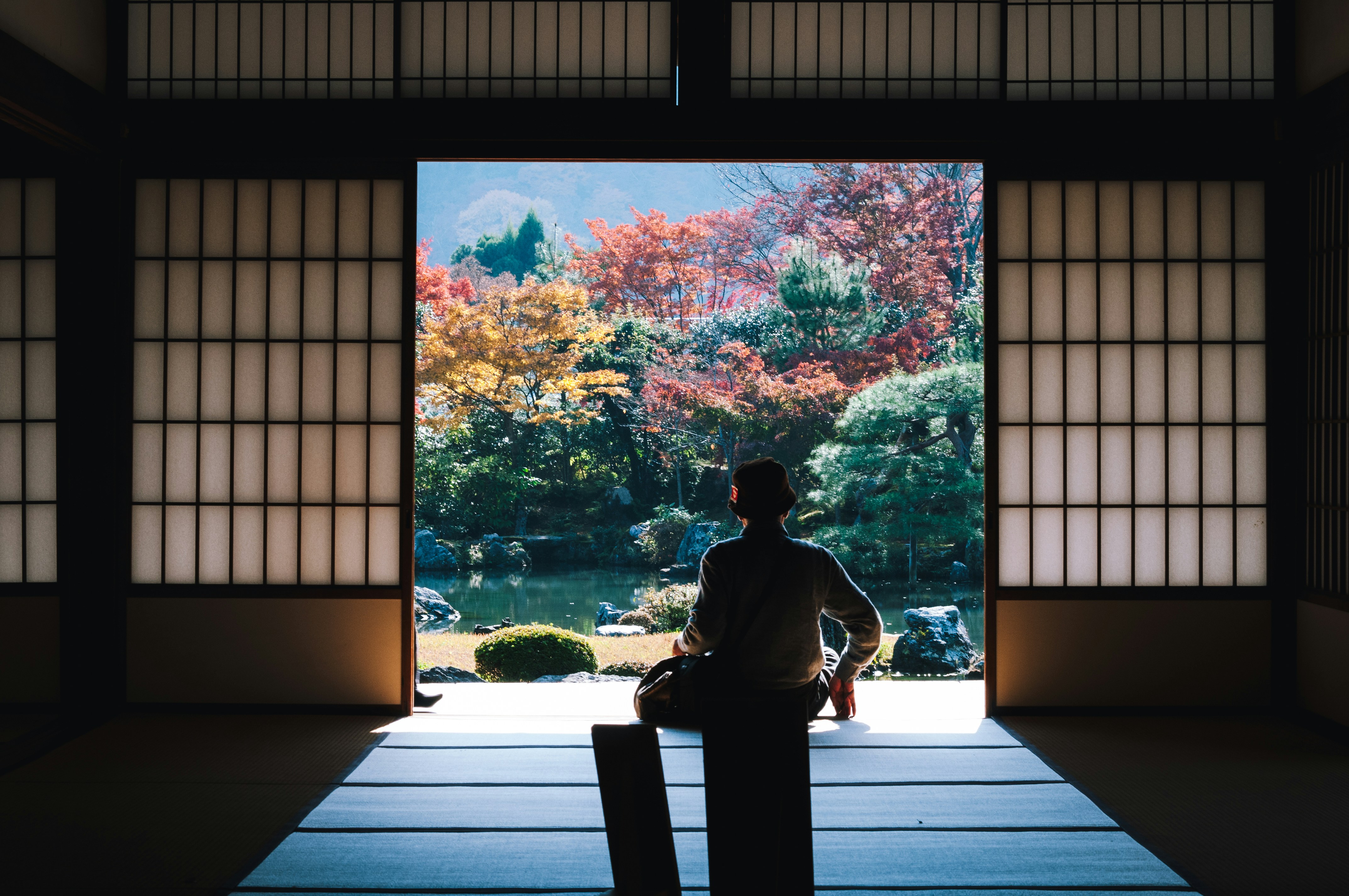
Featured photo by Masaaki Komori on Unsplash.

 EXORDIUM
1 Comment