By Louis Altena An emergent area of inquiry has situated itself around the compatibility of idealist thought with pragmatism. Although … More

The University of Queensland's Student Philosophy e-Journal
By Louis Altena An emergent area of inquiry has situated itself around the compatibility of idealist thought with pragmatism. Although … More

By Samuel Brabham The American pragmatist, John Dewey, and German Existentialist, Martin Buber, were writing during the same period, yet … More

By Arden Cadallo-Dent In philosophy, there exist two different yet connected philosophical methods. The first is the Delphic ‘know thyself’ … More

By Codie Pia Condos Despite frequent attempts to dismiss sexuality as a topic for private consideration, its significance for human … More

By Brooke Jordan The modern liberal democracy has failed democracy itself. This failure is not the result of misuse or … More

By Tristan Ideology operates, so that everything remains the same. It is the family which loves; the school which conditions; … More

By Owen Morawitz There’s a scene in the dystopian science fiction film The Matrix (1999), where the character Morpheus (Laurence Fishburne) … More

By Bradley Van Cooten Two prominent and vastly influential critics of the modern era, Martin Heidegger and Michel Foucault, shared … More

By Jordan Ross Luce Irigaray’s theory of sexual difference as posited in I Love to You attempts to identify the … More

By Sam Adams In this essay, I start by making a moral claim and then examine how that claim would be … More

Issue 6: September 2018 The Connection Between Non-thinking and Evil — Arden Rushwood Arendt suggests that the “banality of evil” manifests … More

Attempts to discern when an agent’s preferences have been inappropriately adapted to suit oppressive conditions embroil the political agendas of feminism in a conflict with value pluralism and respect for agents’ preferences. Jemimah Thompson argues that this conflict ensues in consequence to political aims that cannot succeed without appealing to an objective account of the good. Distinguishing three broad approaches to identifying adaptive preferences—appeals to agents’ internal conditions, external options, and unjust conditions—she outlines a progression whereby each approach collapses into the next when required to account for the hard cases of preference formation. Where the purportedly value-neutral approaches fail to fulfil their political aims, they lead inevitably to more stringent requirements upon agents’ autonomy conditions, and ultimately to an account of the good. Jemimah attributes this progression to an assumption that underlies the feminist concern with adaptive preferences: that an agent cannot autonomously prefer what is not conducive to his or her good. As such, all attempts to identify adaptive preferences rest upon claims as normatively loaded as agents’ own attempts to justify the preferences they hold.
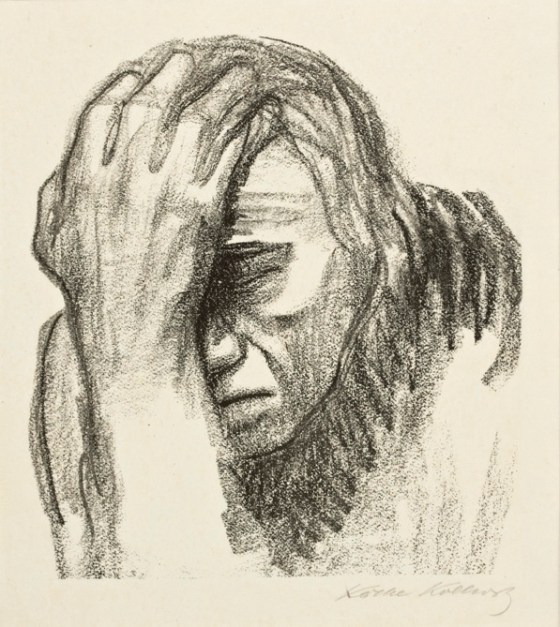
Arendt suggests that the “banality of evil” manifests in non-thinking, and thus that thinking itself may be sufficient to prevent evil. In this essay, Arden Rushwood explores Arendt’s conception of ‘thinking’ and argues that, while thinking may in some sense be necessary for the prevention of evil, it may not be in itself sufficient, as there are other factors that may need to be confronted. He suggests two other factors in addition to nonthinking—namely, ideology, and a crowd mentality—that may also need to be minimised for the successful prevention of evil.

This critical analysis explores the issue of quantum entanglement, and whether the anomalous observations within it can lead to a paradigm shift within the field of Quantum Mechanics. Devmi Epaarachchi argues that a paradigm shift is much overdue, as the anomalies regarding quantum entanglement have reached a critical mass, and this predictably casts doubt on the accuracy of the paradigm.

In this article Souhail Arfaoui approaches Table Art as the place that marks social change. As he argues, the (dinner) table is also the place which marks togetherness, as well as the ability to translate culture and class and to determine the social and relational stratification between social forces that are in conflict within a given field.

Foucault is heralded as a prominent figure in the development of post-modern philosophy. Though his work is comprised of a complicated set of arguments which turn on each other as his thought progresses, this essay by Julian Roney seeks to clarify and attend to the plausibility of his account of resistance to the normalising and violent pressures of the modern world. His intertextual reading of Foucault and Spinoza illuminates the relevance of enlightenment thinking for personal empowerment and assists in determining an ethics for the bio-politics of affective life.

In this paper, Lucy Rykers addresses the contemporary relevance of Audre Lorde’s theory of difference. To do so she draws upon Shireen Roshanravan’s conceptualisation of plurilogue as a tool for positioning Lorde’s theory in relation to two other ‘Women of Colour’ (WOC) theorists, Maria Lugones and Chandra Mohanty. Firstly, she considers how Lorde’s theory as an analytical framework for understanding inequality is enhanced when connected to both Lugones’ and Mohanty’s theories. She then goes on to examine how their collective works continue to offer the way forward in terms of emancipatory and resistance strategies. Ultimately, she argues that conceiving Lorde’s work in coalition with other contemporary WOC theorists ensures the enduring relevance of her theory of difference in 2018.

In 1984, self-described ‘forty-nine-year-old Black lesbian feminist socialist mother of two, including one boy, and member of an interracial couple’ Audre Lorde, proposed that developing new definitions of power and means of relating across difference were crucial among women. In this paper, Grace Dunn engages with advances in feminist ideology and practice that have challenged hetero-patriarchal constructions of power and considered the role of difference in influencing oppression, to ultimately argue that Lorde’s notion remains contemporarily relevant. By considering aspects of her own identity and conviction, she critically engages with: the emergence of intersectionality; the feminisation of politics; and ecofeminism, in order to ultimately highlight both the adoption of, and need for, Lorde’s theory of difference.
 EXORDIUM