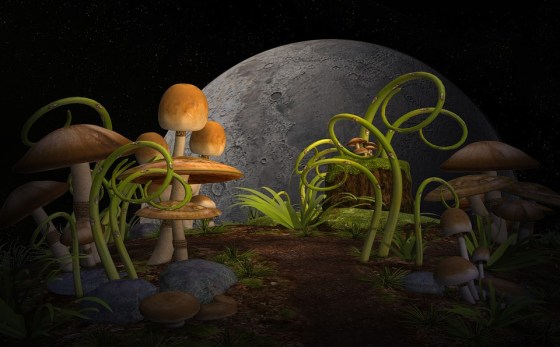
Every Day and Ordinary: Agamben’s State of Exception

Here Samuel Brabham discusses Giorgio Agamben’s claim that the state of exception has become a fixture of contemporary politics. He examines how Carl Schmitt, arguing against Walter Benjamin, elevates the sovereign state above the juridical body. Using two contemporary examples, he assess Agamben’s claim that the state of exception has become the norm. While there is evidence to support Agamben’s claim, Samuel disagrees with his final assessment of the situation and turns to Arendt’s proposition; that the formation of a totalitarian state, while possible, is not inevitable due to the regulatory power existent in contemporary judiciary systems.


To Speak Femininities from Within: Beyoncé as Irigaray’s Mimesis

The work of philosophers such as Luce Irigaray is fundamentally important to our perception of society, though can sometimes be difficult to apply to ‘real life’ outside of academia and literature. However, as Kristy Kaden argues, Irigaray’s strategy of mimesis can be seen at work in many cases, particularly in mainstream music artists such as Beyoncé. Through her most recent two albums, Beyoncé demonstrates a way in which women can successfully occupy the position of the feminine—using it to their advantage in achieving personal success while also working to dismantle harmful feminine stereotypes from within.

Do We Really Need Metaphysics?

Is the traditional methodology of metaphysics acceptable and what is and/or ought to be the relationship between metaphysics and science? In this paper, Kaitlin Smalley outlines the current state of the debate surrounding the fundamental question: can science answer all metaphysical questions? She explores what makes a question metaphysical, and explains why most philosophers seem inclined to believe that science fails to answer all metaphysical questions.

Revising Inauthenticity: Beauvoir’s ‘Moral Fault’ and ‘Oppression’ Distinction

In The Second Sex, Simone de Beauvoir undergoes a philosophical investigation of the notion of freedom and authenticity; her identification of woman as ‘Other’ signifies the complexity of women’s existence and, as Codie Disratis contends, the vital move to acknowledge a difference between ‘moral fault’ and ‘oppression’. Accordingly, she explores this distinction through Beauvoir’s analysis of the cultural naturalisation of women’s reproductive role, their idolisation of man in (heterosexual) ‘romantic love’, and lastly, the means for overcoming their Othered position through their intersubjective relations.

An Ode to Sticks by James Elliott

In the realm of phenomenological enquiry, we encounter a profusion of phenomena. From a basic object like a table, to something more malleable like a rope, all phenomena in our world can be viewed, interpreted, and applied in a myriad of different ways.

So, what about a primordial phenomena like the stick? Is it just a stick?

James Elliott explores the versatility of the great, glorious stick in his poem, ‘An Ode to Sticks’.

The Liars Paradox by William Bindley

The Liar’s paradox is one of the simplest paradoxes to explain, yet one of the hardest to solve. It is the sentence that says “This sentence is false”. If a sentence is true, then what it says must be true. So – in accordance with the forgoing principle – if we suppose that the liar’s sentence is true, we are forced to conclude that it is false. If we suppose that it is false, we are forced to conclude that it is true. Each of these sub-conclusions, together entail the conclusion that the liar’s sentence is true if and only if it is false. Tarski and Kripke each propose their own solutions to the liar paradox. Each solution has strengths and weaknesses, however, what is interesting is that the problems of one solution are solved by the other and vice versa.

The Uncomfortable Deathbed by Rachael Ryan

When 66 year-old Rudi Dobron entered palliative care, he was ready to die. Instead, for a further seven weeks, he endured prolonged, intolerable suffering, engendered by deficits in the modern approach to dying. I concur with urologist Rodney Syme and a large aggregate of others that such discomfort could have been avoided by an earlier death. With reference to the classic case of Mr Dobron, this paper explores both the four-principles and capabilities approaches to ethics and scrutinises current legislation relevant to end-of-life decision-making and physician-assisted dying.

Working for das Man: Heidegger’s Theory of Existence by Nick Holt

Heidegger’s theory of existence is centred around the unique relationship we have with the world and other human beings. Heidegger argues that as humans, we are responsible for creating our own meaning through existence. In doing so we are able to live an authentic life. The alternative to this is a life in which we do not realise the endless possibilities bestowed upon us, and instead we become just another member of the mass, or ‘das Man’.

Editor’s Welcome: Issue 4

Welcome to the fourth issue of the University of Queensland’s student philosophy magazine, Exordium. It is with great pleasure that … More

Hume and the Problem of Induction by William Bindley

Hume’s problem of induction concerns the justification of inductive inferences which is to make predictions based on events. If I infer that some event B will follow from event A by causal necessity, I must suppose the future will resemble the past, which is to suppose that the laws of nature will not change. However, the only way I could justify a belief that the laws of nature will stay regular is by appealing to induction which is the very thing in question.

Active Euthanasia – Not That Bad? by Kianu Stirling

Using the arguments: relief from suffering, appeal to consistency (specifically between passive and active voluntary euthanasia), and an argument for patient autonomy, it will be suggested that laws in Queensland regarding active voluntary euthanasia be brought to the same standards as passive voluntary euthanasia.

Revelations – A Short Story by Tom Clark

After unearthing an ancient artefact buried deep below their subterranean facility, two scientists become obsessed by what had always been an ordinary door. When one of the men submits to its siren-song, and isn’t seen again, his colleague follows. What he finds beyond the door not only reveals the truth behind humanity’s hidden past, but also its ominous future.

Spinoza and the Virtuously Suicidal Octopus by James Meggitt

Can suicide be virtuous? In his Ethics, Benedict Spinoza claims that no thing contains within its essence, or contatus, the ability to destroy itself. But what about Graneledone boreopacifica, the deep water octopus who sacrifices her own life for the survival of her young?

Can Music Pay Off in the Internet Age? by Michael Veal

Before internet streaming, music consumption was entirely unit-based. However, the rising prevalence of streaming sites is curbing this trend by altering the way in which we interact with our favourite songs and artists. We examine how music streaming has revolutionised the way that we relate to music consumption, and the effect these services have had on both consumers and producers within the music industry.