In this essay, Rebeka Abey proposes that the “situation of woman” described by Simone de Beauvoir in The Second Sex—the situation where femininity is seen as an appendage to human nature, subordinate to the masculine, and antithetical to expressions of individual transcendence—is the result of deep-rooted western religious and philosophical beliefs. These beliefs include the Christian belief in woman’s required submission to man and the perversity of female power, as well as the overlapping philosophical dichotomies of masculinity/femininity, rationality/irrationality, the master-slave dialectic, and the divine and Absolute human/Other dualism.
The Phenomenal Complexity of Consciousness
This essay reconstructs and responds to Frank Jackson’s argument that conscious experiences involve non-physical properties, a concept referred to as “qualia.” Ruby Allen argues that physicalists wrongly deny the qualia of phenomenal experiences because they misrepresent the distinction between “knowing-that” and “knowing-how.” Ruby consequently proposes that our conceptualisation of consciousness must be differentiated into two distinct levels: phenomenal consciousness and access-consciousness.
Woman as Other: The Master-Slave Dialectic in Beauvoir’s The Second Sex
In The Second Sex, Simone de Beauvoir engages with G.W.F. Hegel’s master-slave dialectic in her discussion of woman’s alterity in relation to man. Critics claim, however, that her approach is problematic. Contrary to this view, David Fan argues that Beauvoir strategically rethinks Hegel’s philosophical framework in order to account for the possibility of intersubjective collaboration and respect for sexual difference.
The Rightful Condition and Need for Revolution
This essay examines Immanuel Kant’s Doctrine of Right which states that it is contradictory for citizens to attempt revolution against the state. Considering the work of Charles W. Mills and Frantz Fanon, Jordan Ross argues that Kant misses the racial contract that presupposes the social contract, thus making the “rightful condition” deceitful.
Stuck in the Mud: How Colonialist Oppression is Keeping Australia Bogged Down in Climate Crisis
This essay identifies and interrogates the myriad interconnected forms of colonialist oppression that Emily Byrnes argues are the root cause of anthropogenic climate change. These forms of oppression arise from the hierarchical reason-nature dualisms underlying the fundamental structure of Western civilisation. From this standpoint, Emily will argue that the liberation of all Indigenous peoples and lands is absolutely necessary for bringing about an end to the environmental devastation which has catapulted us into our current climate crisis. Given recent events surrounding Indigenous Australian campaigns for independence and COP26, this article is both timely in a political sense and it is highly relevant to the rapidly growing field of environmental philosophy.
Surrealism and Schiller: An Antidote to Plato’s Misconceptions of Art
In The Republic Plato condemns art as a mere imitation of reality, an imitation that does not create in its own sense and morally corrupts humans. In this essay, Geordie Carscadden aims to expose the extent of Plato’s misunderstanding by challenging both his understanding of art as imitative and morally corruptive. This critique of Plato’s philosophy will be achieved through a synthesis of Surrealism, as established by André Breton in his surrealist manifesto, and a discussion of Friedrich Schiller’s aesthetic theory.
The New Age of Anti-Aging Research
Recent developments in the field of biogerontology have prompted a re-examination of the question, “Is ageing a disease?” Within the past decade, scientists have been trying to justify why ageing should be considered a disease without properly examining the myriad philosophical avenues that encompass this topic. In this essay, Emma Barrie considers the ethical questions of genetic therapies versus genetic enhancements as well as distributive justice questions about the consequences of developing a “cure” for ageing. Furthermore, she evaluates the attempts made by scientists to challenge Galen’s argument for ageing as a natural process, thus demonstrating the dire need for a proper philosophical investigation into this topic.
Contents: Issue 8
November 2020
Gilmore Girls: The Irigarayan “Mother-Daughter” Relation in 21st Century Television
by Kitty Lloyd “I like these women.” “I love these women.”[i] The 2000s television show Gilmore Girls emerged as a dominant…
Coronavirus Vaccine Development: Intellectual Property and International Poverty
by Oscar Delaney Intellectual property rights are widely believed to be the only plausible way to incentivise productive but risky…
Reading Adorno with Fisher: Capital, (Inter)passivity and Cultural Malaise
by Will Partridge In the Dialectic of Enlightenment, Theodor W. Adorno and Max Horkheimer outline their conception of the ‘culture industry’;[i] a…
The Stateless and the State: A Modern Social Contract?
by Josh Grainger Whilst being a refugee is the bleak reality for more than twenty-six million people, and it has…
Foucault and the Unravelling of Liberalism
by Kevin Le Merle Michel Foucault’s work has served to undermine the liberal Canon by calling into question the way we…
Creativity x Autonomy: A Collaboration that Instrumentalises Autonomy under Oppressive Circumstances
by Madison Mamczur Adaptive preference formation describes individuals’ preferences that are inconsistent with basic flourishing, and which are formed under…
A Buddhist Perspective on Suicide
by Chara Scroope The following video includes themes of suicide which may trigger some viewers. Note: Both Exordium and the…
Kantian Aesthetics and Morality: A Comparison of the Beautiful and the Sublime
by David Fan At the start of Critique of Judgment, Immanuel Kant presents to us the “great chasm that separates the…
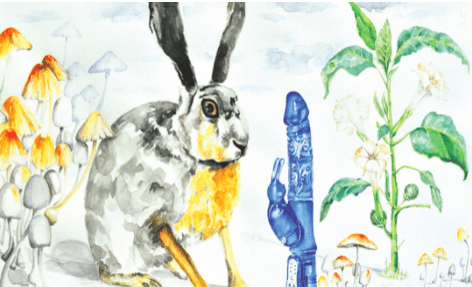
Little Aphrodisiac
by Marnie Ball Open. A whimsical woodland Of pastel beauty, and secret pleasure. Close. Cherish the silence A moment for…
The True Point of Departure in the Early Modern Period
by Rory Brown This is an edited reprint of an original version of this essay which originally appeared in AustLit…