Quietist Speech and the Phenomenological Sign

Ludwig Wittgenstein offers a novel and cutting criticism of philosophical realism. The ‘quietist’ critique finds fault with the discipline’s misuse of concepts outside of their relevant ‘language games.’ Instead, it calls for a philosophy that forgoes positing any form of explanation and, in lieu of doing so, limits itself to pure description. In practice, this is often taken up by withholding any positive theses about the ontological ‘state of things,’ and simply stating things ‘as they are.’ In this essay, Mikel van Dyken extends upon John McDowell’s and Paul Davies’ proposals of Immanuel Kant and Edmund Husserl, respectively, as philosophers who manage to avoid the quietist critique. Van Dyken argues that while Kant and Husserl are largely successful in constructing a purely descriptive philosophy, they each make certain dogmatic explanatory assertions. Van Dyken then proposes Merleau-Ponty’s analysis of the lived experience of the world as a productive philosophy which succeeds in avoiding the quietist critique.

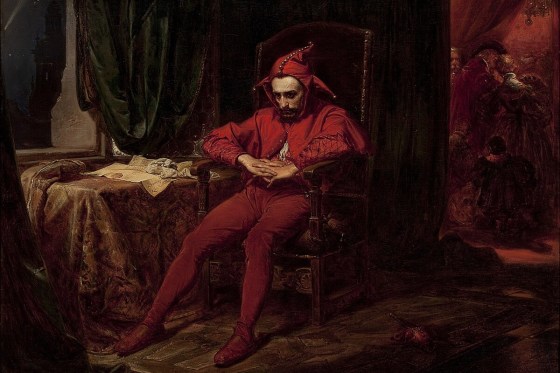
In the Shadows

Inspired by philosophers such as Sartre, Kierkegaard, and Kafka, this literary work explores key themes of Existentialism and Absurdism, uniting them to question what it truly means to live a meaningful life and whether the search for meaning can ever be a productive pursuit. Through the eyes of the protagonist, Thomas, the reader experiences the same torment that arises from this struggle. The work explores nihilism and despair, yet the conclusion seeks to uncover a more hopeful path, one that encourages a renewed pursuit capable of uplifting the reader and those who have faced, or are facing, thoughts of suicide.

Extending Adorno: The Culture Industry, Literature, and Language

While the majority of Theodor Adorno and Max Horkheimer’s ‘The Culture Industry’ presents a diagnostic account of the culture industry’s institutionalising sameness as a by-product of modern capitalism, the final section undergoes a rapid and distinct turn towards linguistic analysis. In this essay, Melinda Herman argues that this shift in analytical target indicates a deeper relationship between the culture industry’s ubiquity and its effect on language – one that can be expanded upon to account for literature’s position in modern society. To do so, Herman extracts a holistic account of language under capitalism from ‘The Culture Industry’ and Adorno’s broader philosophy of language, arguing that the culture industry’s self-supporting sameness translates into a degradation of language’s meaning-making capacity. Words function representationally, designating things, not meaning. From this standpoint, Herman introduces an obscure essay by Adorno that ties literature’s formal function to its description of subjectively lived specificity. Herman concludes that this role is deeply problematised by hegemonic sameness that reduces the meaning-making capacity of language to a hollow representationalism at direct odds with its artistic function.