Issue 13 | December 2025 Welcome to the thirteenth issue of Exordium, the University of Queensland’s student philosophy e-journal. This … More

The University of Queensland's Student Philosophy e-Journal
Issue 13 | December 2025 Welcome to the thirteenth issue of Exordium, the University of Queensland’s student philosophy e-journal. This … More

Ludwig Wittgenstein offers a novel and cutting criticism of philosophical realism. The ‘quietist’ critique finds fault with the discipline’s misuse of concepts outside of their relevant ‘language games.’ Instead, it calls for a philosophy that forgoes positing any form of explanation and, in lieu of doing so, limits itself to pure description. In practice, this is often taken up by withholding any positive theses about the ontological ‘state of things,’ and simply stating things ‘as they are.’ In this essay, Mikel van Dyken extends upon John McDowell’s and Paul Davies’ proposals of Immanuel Kant and Edmund Husserl, respectively, as philosophers who manage to avoid the quietist critique. Van Dyken argues that while Kant and Husserl are largely successful in constructing a purely descriptive philosophy, they each make certain dogmatic explanatory assertions. Van Dyken then proposes Merleau-Ponty’s analysis of the lived experience of the world as a productive philosophy which succeeds in avoiding the quietist critique.

Kierkegaard’s treatment of the Akedah in Fear and Trembling has caused consistent confusion for ethicists and existentialists alike. In this essay, James Patterson advocates a reconsideration of the universal and absolute in Kierkegaard’s theory, and a subsequent criticism of 20th century responses. The inner workings of Abraham’s mind are a mystery to us, but we must take Kierkegaard’s attempt to unravel this display of faith seriously. Readings posited by Levinas and Derrida show compelling responses to Kierkegaard, however, they ultimately fail to realise the significance of eschatological hope – a state of mind that embraces a teleology founded on absurdity. Viewing faith as a function of eschatological hope is necessary to fully appreciate how belief sits not alongside, but above ethics.

This article examines the relationship between autonomy and adaptive preferences, arguing that prevailing philosophical accounts, such as those of Serene Khader and Natalie Stoljar, treat adaptive preferences too superficially. Standard approaches, such as those advanced by Khader and Stoljar, tend to frame adaptive preferences as either impairments of autonomy or as incompatible with basic flourishing. Drawing on cases of intimate partner violence (IPV), Sithara-Anne French exposes a key oversight in these models: the failure to account for the complex interplay between oppression, internalised stereotypes, and preference formation. While Stoljar’s psychological processes model recognises how oppressive contexts undermine critical reflection, French argues that it does not fully address the deep psychological harms such contexts produce. Similarly, she contends that Khader’s focus on expanding options overlooks how internalised oppression can obscure the perceived value of alternatives. French proposes an expanded framework for understanding adaptive preferences, one that recognises the unconscious mechanisms by which oppression shapes desires, while preserving respect for victims’ agency.

In this essay, Xavier Woodgate argues against Walter Benjamin’s claim that film, as a mechanically reproduced work of art, no longer possesses an ‘aura’, and that, rather, having left the spotlight of contemporaneity that Benjamin thought of film in, it has achieved a historicity that has established an ‘aura’ for film. However, Woodgate does not eschew Benjamin’s claim against the loss of aura in mechanically reproduced works entirely, and he maintains it against some contemporary developments in the mechanical reproduction of art through a diachronic analysis of the evolution of film into livestreaming.

This essay explores the Dutch Golden Age painter Rembrandt Harmenszoon van Rijn’s self-portraits from both an art historical and philosophical perspective. In this essay, Andrew Millar argues that rigorous art historical analysis that situates Rembrandt’s self-portraiture within a blossoming, observable art historical tradition intersected with market demands and historically accurate trends in art does not exclude their philosophical, psychological analysis as some art historians claim. Rather, Millar draws from phenomenological art historical methods to argue that Rembrandt’s portraits function as an exploration and disclosure of the acts of seeing and self-recognition.

Science, and the epistemological position of scientific realism, hold a privileged position in culture, politics, and philosophy. The proliferation of science-oriented conspiracy theories, appears initially, to be a critique of this privileged position, akin in many ways to philosophical critiques, found in scepticism and quietism. However, conspiracy thinking critiques who holds privileged access to the external world, rather than there being access to a mind-independent world (scepticism), or the use of scientific thinking in philosophy (quietism). Victoria Lawson argues that science-based conspiracy theories, using Naomi Klein, are a political, not philosophical, critique of modern culture. Inside a given conspiracy-theorist denial claim – this scientific fact is incorrect – is a separate claim, that the scientist is ‘lying to them.’ This accusation of deceit is a denial that scientists are communicating to us, an accurate account of the world, which, we do feel unsettled by.
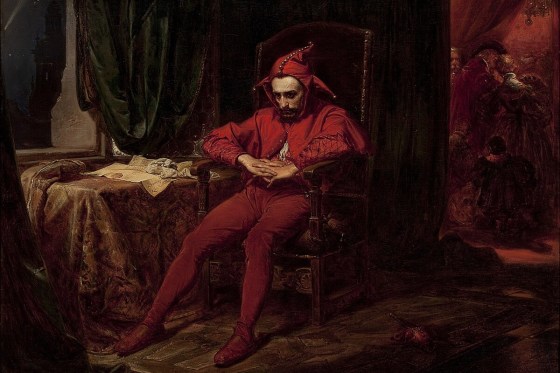
Inspired by philosophers such as Sartre, Kierkegaard, and Kafka, this literary work explores key themes of Existentialism and Absurdism, uniting them to question what it truly means to live a meaningful life and whether the search for meaning can ever be a productive pursuit. Through the eyes of the protagonist, Thomas, the reader experiences the same torment that arises from this struggle. The work explores nihilism and despair, yet the conclusion seeks to uncover a more hopeful path, one that encourages a renewed pursuit capable of uplifting the reader and those who have faced, or are facing, thoughts of suicide.

While the majority of Theodor Adorno and Max Horkheimer’s ‘The Culture Industry’ presents a diagnostic account of the culture industry’s institutionalising sameness as a by-product of modern capitalism, the final section undergoes a rapid and distinct turn towards linguistic analysis. In this essay, Melinda Herman argues that this shift in analytical target indicates a deeper relationship between the culture industry’s ubiquity and its effect on language – one that can be expanded upon to account for literature’s position in modern society. To do so, Herman extracts a holistic account of language under capitalism from ‘The Culture Industry’ and Adorno’s broader philosophy of language, arguing that the culture industry’s self-supporting sameness translates into a degradation of language’s meaning-making capacity. Words function representationally, designating things, not meaning. From this standpoint, Herman introduces an obscure essay by Adorno that ties literature’s formal function to its description of subjectively lived specificity. Herman concludes that this role is deeply problematised by hegemonic sameness that reduces the meaning-making capacity of language to a hollow representationalism at direct odds with its artistic function.

In this essay, Emma Fensom examines Immanuel Kant’s distinction between active and passive citizens within his rightful state. In particular, Fensom focuses on whether such distinction can justify denying suffrage to those deemed ‘dependent’, and thus passive within society. Ultimately, Fensom finds Kant’s distinction to be arbitrary and grounded in prejudice. Further, she argues that a Kantian state will never be able to create the necessary conditions for those deemed passive to become active, where it cannot be guaranteed that active citizens will always vote in accordance with the general will.
 EXORDIUM