Between Seeing and Being Seen: Rembrandt’s Self-Portraiture and the Ethicality of Vision

This essay explores the Dutch Golden Age painter Rembrandt Harmenszoon van Rijn’s self-portraits from both an art historical and philosophical perspective. In this essay, Andrew Millar argues that rigorous art historical analysis that situates Rembrandt’s self-portraiture within a blossoming, observable art historical tradition intersected with market demands and historically accurate trends in art does not exclude their philosophical, psychological analysis as some art historians claim. Rather, Millar draws from phenomenological art historical methods to argue that Rembrandt’s portraits function as an exploration and disclosure of the acts of seeing and self-recognition.

Conspiratorial Thinking: Can Alternative Facts be a Philosophical Position?

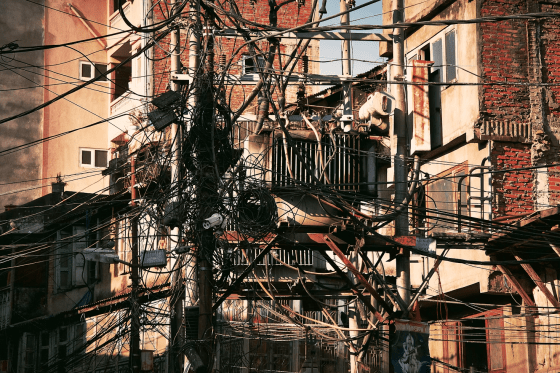
Science, and the epistemological position of scientific realism, hold a privileged position in culture, politics, and philosophy. The proliferation of science-oriented conspiracy theories, appears initially, to be a critique of this privileged position, akin in many ways to philosophical critiques, found in scepticism and quietism. However, conspiracy thinking critiques who holds privileged access to the external world, rather than there being access to a mind-independent world (scepticism), or the use of scientific thinking in philosophy (quietism). Victoria Lawson argues that science-based conspiracy theories, using Naomi Klein, are a political, not philosophical, critique of modern culture. Inside a given conspiracy-theorist denial claim – this scientific fact is incorrect – is a separate claim, that the scientist is ‘lying to them.’ This accusation of deceit is a denial that scientists are communicating to us, an accurate account of the world, which, we do feel unsettled by.

Extending Adorno: The Culture Industry, Literature, and Language

While the majority of Theodor Adorno and Max Horkheimer’s ‘The Culture Industry’ presents a diagnostic account of the culture industry’s institutionalising sameness as a by-product of modern capitalism, the final section undergoes a rapid and distinct turn towards linguistic analysis. In this essay, Melinda Herman argues that this shift in analytical target indicates a deeper relationship between the culture industry’s ubiquity and its effect on language – one that can be expanded upon to account for literature’s position in modern society. To do so, Herman extracts a holistic account of language under capitalism from ‘The Culture Industry’ and Adorno’s broader philosophy of language, arguing that the culture industry’s self-supporting sameness translates into a degradation of language’s meaning-making capacity. Words function representationally, designating things, not meaning. From this standpoint, Herman introduces an obscure essay by Adorno that ties literature’s formal function to its description of subjectively lived specificity. Herman concludes that this role is deeply problematised by hegemonic sameness that reduces the meaning-making capacity of language to a hollow representationalism at direct odds with its artistic function.

Are Women and the Poor Competent Voters? Active and Passive Citizens in a Kantian State

In this essay, Emma Fensom examines Immanuel Kant’s distinction between active and passive citizens within his rightful state. In particular, Fensom focuses on whether such distinction can justify denying suffrage to those deemed ‘dependent’, and thus passive within society. Ultimately, Fensom finds Kant’s distinction to be arbitrary and grounded in prejudice. Further, she argues that a Kantian state will never be able to create the necessary conditions for those deemed passive to become active, where it cannot be guaranteed that active citizens will always vote in accordance with the general will.