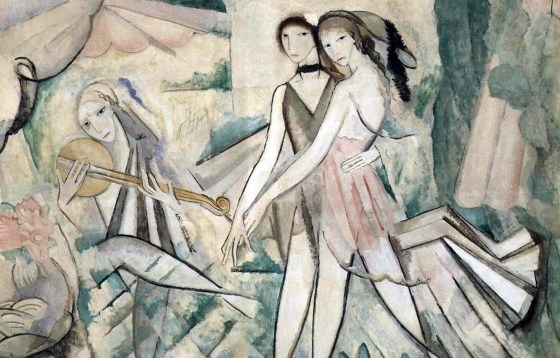
In this essay, Liv Evans takes an encounter with a Pompeiian fresco often associated with Sappho as an opportunity to place Walter Benjamin’s better-known and more polemical account of aura in conversation with his other writings on translation and history, as well as with a broader tradition of queer scholarship concerned with how we relate to an absent and fragmentary past. By complicating the apparent opposition between aura and reproducibility, Evans explores the possibilities that arise from reconceiving their relation as entangled and generative, suggesting that reproduction may be understood to emerge from and itself become a site of auratic distance. As this exploration unfolds, Sappho becomes both the imagined subject of the painting and a philosophical voice through which to think about the ethical and political significance of aesthetic and temporal relations, and about what auratic distance, when freed from institutional authority, might offer: the possibility of re-encountering, re-creating, and remembering, “even in another time.”