By Alejandro Aparicio-Gomez
To say that Australia’s tertiary education sector is in a challenging position right now would be an understatement. Recent global university rankings have shown nation-wide declines, signalling not only institutional instability but also broader concerns around funding, precarity, and the future of academic labour.[1] For aspiring academics, this creates an increasingly competitive and uncertain landscape. As someone whose dream has always been a career in academia, this reality is deeply worrying. Despite my many critiques of the current system, I still find myself asking: how can I position myself within it? Despite the challenges, can I differentiate myself from the countless other poor young academics who share the same goal? And perhaps most importantly, what does success in academia even look like under these conditions?
A recent study I found while researching this piece suggests that survival in academia is closely tied to narrative construction: “The key element [to stay in academia] seems to be the ability to construct a narrative that helps present oneself as a researcher with strong potential to make unique contributions and create lasting impacts.”[2] In this sense, the CV and cover letter are not merely administrative documents but narrative tools; they are spaces in which one must carefully curate a coherent academic self. What experiences, then, can I weave into the tapestry of my life? Coming into this reflection, I was aware of AI’s strengths in generating job application materials, but I had little first-hand experience, having not applied for jobs in some time. I was initially doubtful about how useful it would be in writing a cover letter for a graduate position in academia. However, once I began, I was struck by how quickly the AI could generate, adapt, and refine a CV and cover letter to suit specific academic roles. The AI was effortlessly integrating new information, reshaping my experiences into polished, ‘marketable’ narratives. I saw firsthand just how effective the AI was at producing exactly what employers seem to want: clarity, coherence, and professionalism. In this sense, AI is a powerful tool for aligning applicants with employer expectations. But pretty quickly alarm bells began to ring in my head. What does it really mean to produce what employers want? What assumptions, norms, and values are embedded within these outputs, has anyone thought to challenge them? And most importantly to me, are these the norms and values ones that I want to rely on as I construct my narrative?
From the outset the central challenge I faced was one of identity. How much of my cultural background did I want to include in these AI-generated materials? Despite my pride in my unique cultural identity (as an Australian-born, Salvadoran man with Canadian citizenship) and my steadfast belief in it as one of my greatest strengths, I found myself uncharacteristically hesitant but I had no idea why. Was this hesitation coming from a typical humanities-student scepticism of AI or was it something deeper? Reflecting on my previous resistance towards AI, one concern came forward louder than all others. Even before this recent AI craze, many scholars argued that because AI systems depend upon massive swathes of data heavily skewed towards Western, white, hegemonic perspectives, these algorithms internalised these exact same biases.[3] As such, they are not neutral tools but mechanisms that reproduce existing hierarchies, privileging certain identities while marginalising others. A recent study from the University of Washington tested three popular Large Language Models and found that they favoured resumes from white-associated names 85% of the time, and female-associated names 11% of the time, with Black men faring the worst as models preferred other candidates nearly 100% of the time.[4] This fact, coupled with my lecturer’s numerous hints at the increasing use of AI software in the recruitment processes of academic institutions (including perhaps a certain university’s) for automated CV analysis only magnified my trepidation about centring my unique identity in these employment materials. But why does this bias persist? While AI is undoubtedly trained on racist and colonial historical data, there is also an abundance of contemporary data that challenges these biases. Through what process does discriminatory data take precedence over inclusive data?
These questions brought me back to Frantz Fanon’s Black Skin, White Masks. In it, Fanon writes that “in the man of colour there is a constant effort to run away from his own individuality, to annihilate his own presence.”[5] He describes an inferiority complex produced by colonial systems, where colonised subjects become alienated from their identity and are suffocated in the life and subjectivity they can experience. Colonised subjects thus internalise the values of the coloniser and attempt to approximate them. They develop the calluses of whiteness to protect themselves from what they have been told is the horror of their black skin.[6] Fanon explains that this process of alienation—where white calluses develop into white masks that lynch the subjectivity of the Black-skinned—emerges because the colonised subject is “victim to a system based on the exploitation of one race by another and the contempt for one branch of humanity by a civilization that considers itself superior.”[7] In attempting to align with dominant norms, colonial subjects become distanced from their own identities.
For me, the parallels with AI were striking. AI is not a colonised subject, however, it is trained on cultural data shaped by the very same colonial histories and power structures that trapped Black people in their blackness.[8] As a result, while AI is not an oppressed human subject alienated from its identity and culture, its outputs commodify and reproduce the same hierarchies—and not by accident. What was initially sold as a neutral information system is unmasked as yet another structure that reflects and reinforces dominant ideologies. Then, just as colonial subjects internalise and reaffirm oppressive structures, AI assumes them as fact through its training data and reproduces them through its output. In both cases, the subjectivity of marginalised identities is constrained. Fanon knew that “nothing from a racist culture can inform liberatory racial thinking precisely because the existence of racism ‘deeply modifies’ what appears in culture as race.”[9] AI draws from this repository of Western culture that has always worked to restrict subjectivity for racialized subjects, it then adopts these colonial, racist attitudes, internalises them, and reproduces them without challenge. Yet again, the identity afforded/available to people of colour is restricted, serving to further white colonial interests around the world at the expense of non-white bodies, suffocating the inner lives of the person of colour.[10]
After reflecting on these thoughts, the question in my mind quickly became, does my hesitation come from not wanting to share my cultural identity just with AI, or is it that I’m reluctant to share this with anybody? Was I running away from my own individuality because of this inferiority complex? Fanon wrote that eventually “every colonized people… finds itself face to face with the language of the civilizing nation.”[11] AI, as a product of Western technological systems, can be seen as an extension of this “language.” In engaging with it, was I unconsciously confronting the dominance of that cultural framework? Was my hesitation a reflection of an internalised awareness of the limits placed on expression within that system? Had I come face to face with the language of the ‘civilising’ nation and balked? Maybe…
Or maybe not. Who is to say? This question has not left my mind, and I do not believe I will ever arrive at a satisfactory answer. But for now, I turn to the words of those infinitely wiser than me to try and get a better sense of what I’m facing.
As profound an impact as Fanon’s thoughts have had on me, there is the reality that I am not black. Fanon wrote about all colonised subjects but specifically he wrote about what he termed the “fact of blackness.”[12] While Fanon provides a powerful framework, his work mainly operates within a simple binary of oppressor and oppressed, of coloniser and colonised. However, my identity is not so simple; mine is of both. I do not fully occupy one position or the other. Even if I were to write my resume in my native Spanish it would still be the language of the oppressor.
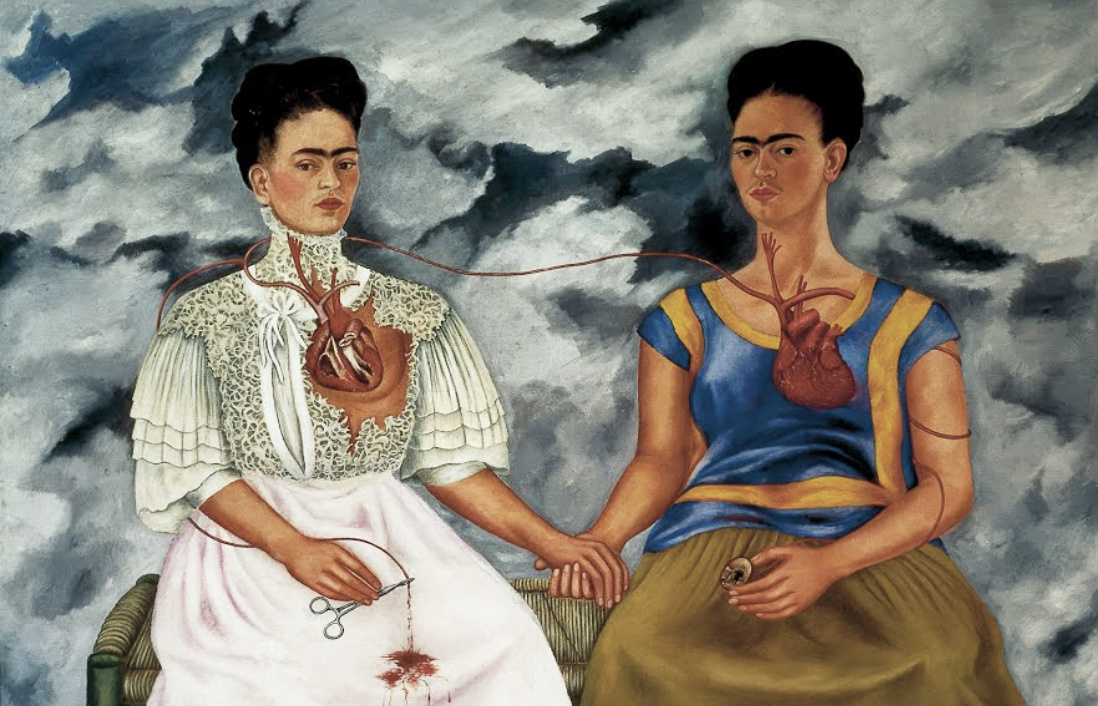
This is where Gloria Anzaldúa’s Borderlands/La Frontera: The New Mestiza becomes particularly meaningful. She argues that us ‘mestiza’ individuals, those who have grown up in-between cultures, straddling that border “in a state of perpetual transition,” undergo “a struggle of flesh, a struggle of borders, an inner war.”[13] Our conflicting yet coexisting cultural belief systems and identities come together to cause “un choque, a cultural collision.”[14] For me, this idea resonates deeply. I know myself, my identity is not fixed; it is a site of constant negotiation, a frontier of battle and of invention. My body becomes a kind of borderland—a space where cultures intersect, conflict, and combine. This is not a peaceful synthesis, but an ongoing, sometimes uncomfortable process. “The new mestiza copes by developing a tolerance for contradictions, a tolerance for ambiguity… She learns to juggle cultures.”[15] I see myself in this framework. I have a plural identity; I operate across multiple cultural modes. And my hybrid self intimately understood this fact well before I found Anzaldúa’s work. I always had the goal of becoming an academic but, while choosing a university course, I had serious doubts whether I could find one that would allow me to pursue my cross-cultural interests. I have never wanted to be sorted into a box and could not envision a future in academia if there was any chance I might be restricted in what I could study. As Anzaldúa knows, the new mestiza “has a plural personality, she operates in a pluralistic mode—nothing is thrust out… nothing rejected, nothing abandoned.”[16] I am only myself; I juggle cultures, I have a hybrid identity and this mestizaje that emerges is unique and is my own.
Returning to the role of AI in constructing academic narratives, it is clear that while AI excels at producing coherent and marketable documents, it does so within existing frameworks. It reflects what academia already values, reinforcing dominant norms rather than challenging them. This is both its strength and its limitation—but not mine. While AI can help articulate a compelling professional narrative, it cannot fully capture the complexity of hybrid identities or the tensions within them, within me. Nor does it necessarily create space for alternative ways of knowing and being.
En fin, critically reflecting on my own story helped demonstrate to me where I fit in amongst the long lineage of anti-colonial thinkers whom I admire for their determination to challenging the constraints imposed upon them by dominant Western frameworks. As decolonial thinker Aníbal Quijano writes, “The liberation of intercultural relations from the prison of coloniality implies the freedom to choose between various cultural orientations… and the freedom to produce, criticize, change, and exchange culture and society.”[17] This is the narrative I choose.
I will not reduce myself to a singular, simplified identity for the sake of institutional acceptance. Nor will I allow AI (or the hegemonic structures it reflects) to diminish the complexity of my hybridity.
The future, I and many others know, is not singular but plural. It is communal, chicano, mestiza, and constantly evolving. “There is no need for the White subject to justify its existence, because its humanity is not brought into question.”[18] So why should I have to do the same?
It is my future. And in that future, I hope to exist fully, unapologetically, as myself.
Alejandro is an Advanced Humanities student, majoring in philosophy and religious studies, who is currently preparing to commence his honours in philosophy in 2027. His research interests include Latin-American history, the philosophical imaginary, and decolonial theory. On the rare days that an assignment isn’t due imminently, Alejandro can be found planning his next holiday or dancing the weekend away.
Bibliography
Anzaldúa, Gloria. Borderlands: La Frontera: The New Mestiza. Aunt Lute Books, 1987.
Adams, Rachel. “Can artificial intelligence be decolonized?” Interdisciplinary Science Reviews 46 (2021): 176-197. https://doi.org/10.1080/03080188.2020.1840225.
De Marchi, Bianca. “Australian unis have dropped again in global rankings. Here’s why we can’t just shrug it off.” The Conversation. 5 June 2026. https://theconversation.com/australian-unis-have-dropped-again-in-global-rankings-heres-why-we-cant-just-shrug-it-off-284323.
Drabinski, John. “Frantz Fanon.” The Stanford Encyclopedia of Philosophy. 14 March 2019. https://plato.stanford.edu/archives/spr2019/entries/frantz-fanon/.
Fanon, Frantz. Black Skin, White Masks. Pluto Press, 1986.
Fiddick, Jalen. “Never Enough: Frantz Fanon and Identity.” Student Journal: ONE (2023). https://artsone.arts.ubc.ca/student-journal/never-enough-frantz-fanon-and-identity/.
Quijano, Aníbal. “Coloniality and Modernity/Rationality.” Cultural Studies 21 (2007): 168-178. https://doi.org/10.1080/09502380601164353.
Sithole, Tendayi. “The Concept of the Black Subject in Fanon.” Journal of Black Studies 47 (2016): 24-40. https://doi.org/10.1177/0021934715609913.
Ta, Binh & Hoang, Cuong & Khong, Hang & Dang, Trang. “Australian PhD graduates’ agency in navigating their career pathways: stories from social sciences.” Higher Education 88 (2024): 1525-1545. https://doi.org/10.1007/s10734-024-01181-6.
Wilson, K., & Caliskan, A. “Gender, Race, and Intersectional Bias in Resume Screening via Language Model Retrieval.” Proceedings of the AAAI ACM Conference on AI, Ethics, and Society 7 (2024): 1578–1590. https://doi.org/10.1609/aies.v7i1.31748.
[1] Bianca De Marchi, “Australian unis have dropped again in global rankings. Here’s why we can’t just shrug it off,” The Conversation, 5 June 2026, https://theconversation.com/australian-unis-have-dropped-again-in-global-rankings-heres-why-we-cant-just-shrug-it-off-284323.
[2] Binh Ta et al., “Australian PhD graduates’ agency in navigating their career pathways: stories from social sciences,” Higher Education 88 (2024): 1540. https://doi.org/10.1007/s10734-024-01181-6.
[3] Rachel Adams, “Can artificial intelligence be decolonized?” Interdisciplinary Science Reviews 46 (2021): 176-197. https://doi.org//10.1080/03080188.2020.1840225.
[4] Kyra Wilson and Aylin Caliskan, “Gender, Race, and Intersectional Bias in Resume Screening via Language Model Retrieval,” Proceedings of the AAAI ACM Conference on AI, Ethics, and Society 7 (2024): 1578. https://doi.org/10.1609/aies.v7i1.31748.
[5] Frantz Fanon, Black Skin, White Masks (Pluto Press, 1986), 60.
[6] Jalen Fiddick, “Never Enough: Frantz Fanon and Identity,” Student Journal: ONE (2023). https://artsone.arts.ubc.ca/student-journal/never-enough-frantz-fanon-and-identity/ .
[7] Fanon, Black Skin, White Masks, 224.
[8] Fanon, Black Skin, White Masks, 11.
[9] John Drabinski, “Frantz Fanon,” The Stanford Encyclopedia of Philosophy, March 14 2019, https://plato.stanford.edu/archives/spr2019/entries/frantz-fanon/.
[10] Fiddick, “Never Enough,” Student Journal: ONE (2023).
[11] Fanon, Black Skin, White Masks, 18.
[12] Fanon, Black Skin, White Masks, 109.
[13] Gloria Anzaldúa, Borderlands: La Frontera: The New Mestiza (Aunt Lute Books, 1987), 78.
[14] Anzaldúa, Borderlands, 78.
[15] Anzaldúa, Borderlands, 79.
[16] Anzaldúa, Borderlands, 79.
[17] Aníbal Quijano, “Coloniality and Modernity/Rationality,” Cultural Studies 21 (2007): 178. https://doi.org/10.1080/09502380601164353.
[18] Tendayi Sithole, “The Concept of the Black Subject in Fanon,” Journal of Black Studies 47 (2016): 30. https://doi.org/10.1177/0021934715609913.
Featured Image: Frida Kahlo, The Two Fridas, oil on canvas, 1939.


